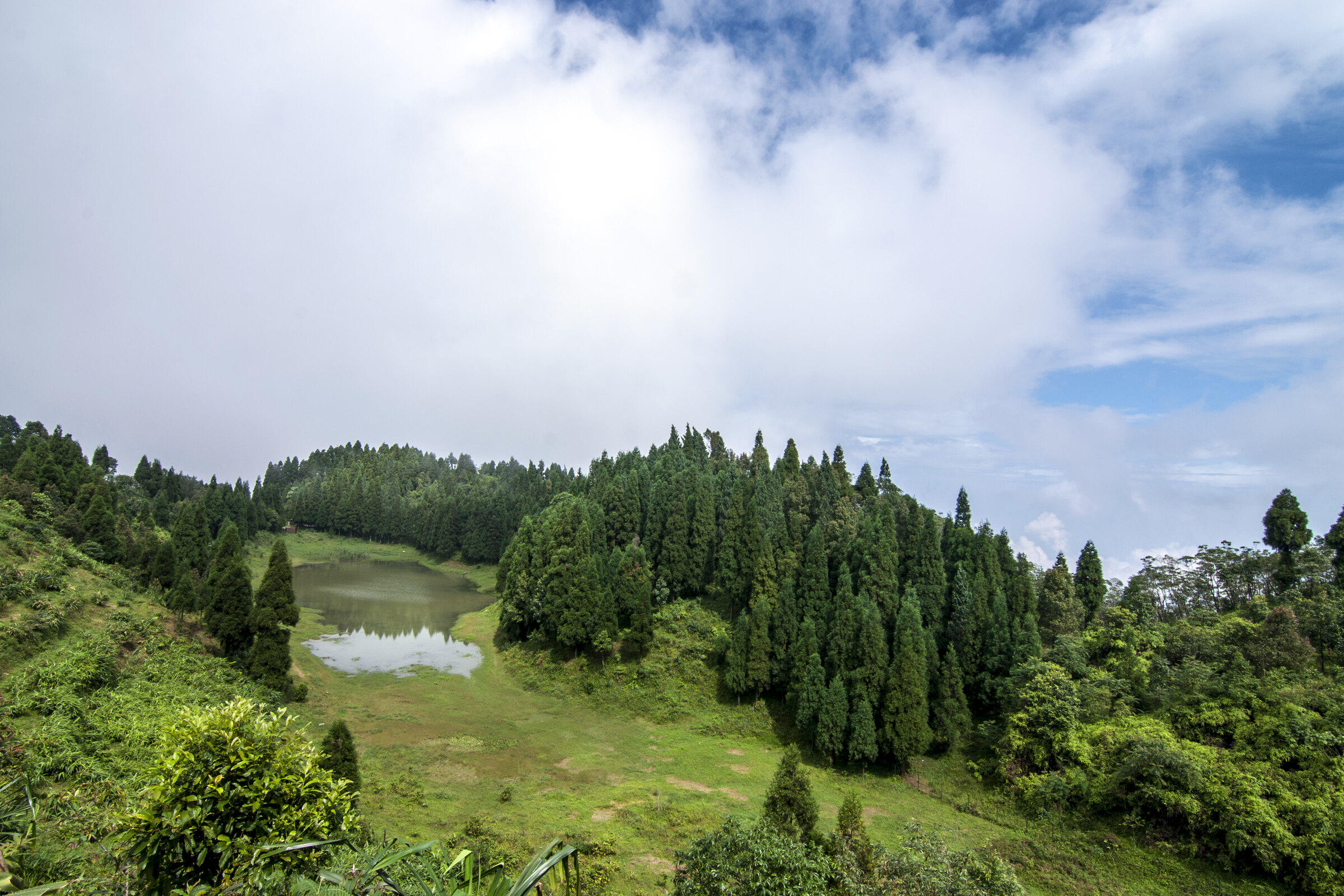
Latpanchar is best for birders, forest lovers and travellers comfortable with early starts, quiet evenings and limited town infrastructure.
Trip intelligence / checked August 2026
At a glance
A birding and forest guide to Latpanchar with realistic wildlife, viewpoint and access advice.
- Best for
- Birding and forest stays
- Famous sighting
- Rufous-necked hornbill
- Ideal stay
- 2 nights
Why Latpanchar is a serious nature stop
Latpanchar lies in the Mahananda landscape and draws birders for forest habitat across changing elevations. The rufous-necked hornbill is a celebrated target, but the richer experience is learning the forest's calls, mixed flocks and seasonal movement with a local guide.
Birding, viewpoints and nearby nature
Plan an early forest session, a clear-weather viewpoint and a respectful visit toward Namthing Pokhri when local access and season allow.
- Dawn birding with a local guide
- Ahaldara viewpoint in clear weather
- Namthing Pokhri seasonal wetland
- Slow village and forest walks
Best season and field etiquette
October to April covers many useful birding periods, with species and visibility changing by month. Use muted clothing, keep playback to an absolute minimum, never crowd a nest and remain on locally approved paths.
Plan with live local context
Before you set out
A local nature guide adds real value. Wildlife sightings are never guaranteed, so focus on habitat, patience and respectful observation.
Mountain-road timing, access rules and fares can change after weather or road work. Reconfirm the final approach with your stay, driver or the relevant local authority shortly before travel.
Frequently asked questions
Can I see the rufous-necked hornbill in Latpanchar?+
The species is a major reason birders visit, but no sighting is guaranteed. A knowledgeable local guide and early starts improve your chances.
How many nights should a birder stay?+
Two nights is a useful minimum; serious birders may want three or more mornings to cover different habitats.